
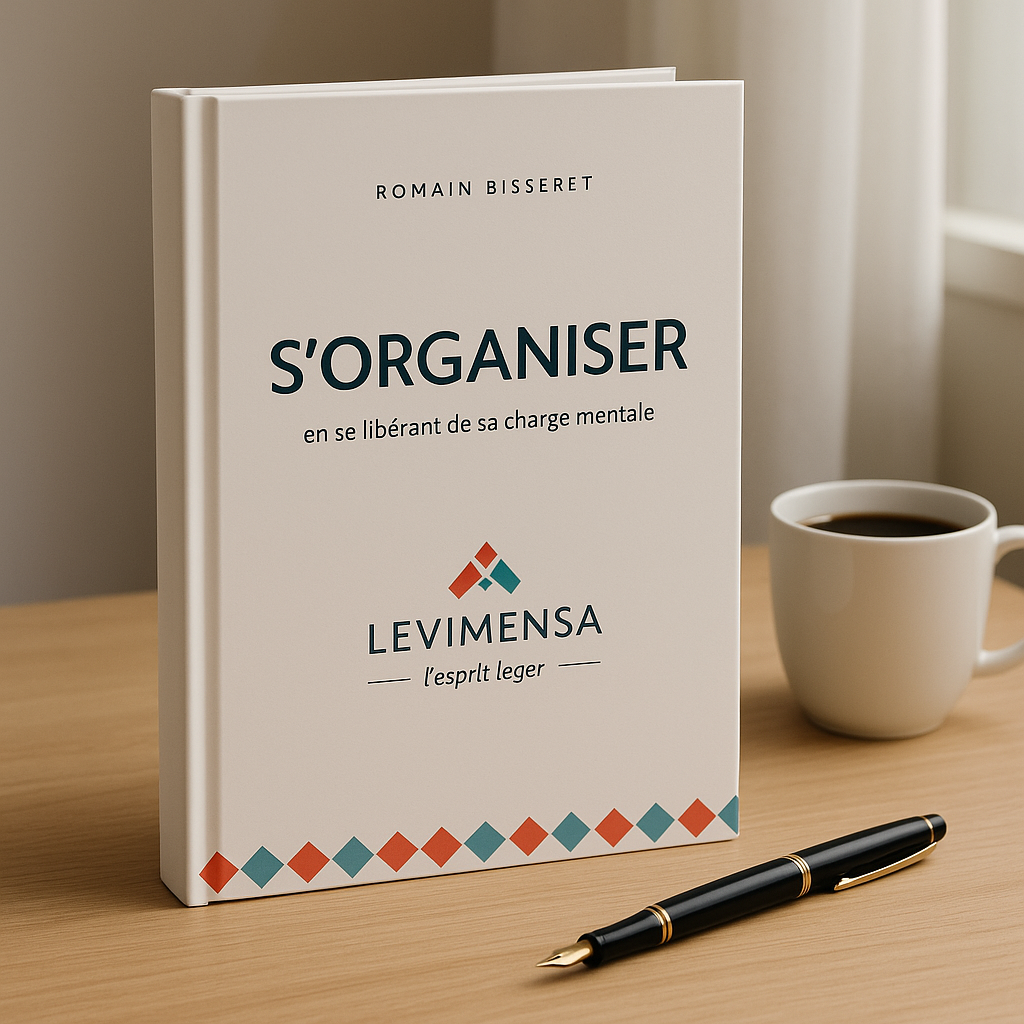
Free first chapter

Your managers are capable… but their heads are overflowing!

Meetings, emergencies, pending decisions: your management teams carry an invisible mental load that drags down their effectiveness, and nobody ever gave them the right tools. Romain Bisseret designed a practical method to empty those heads and take back control.

PDF sent immediately. No spam, no pushy sales follow-ups. Unsubscribe in one click.

The book Organisation for peace of mind, by Romain Bisseret

The reality

A mental load their tools don't capture

Your team leaders, site managers and transformation leads aren't overheating because they're badly organised in the usual sense. They're overheating because they hold dozens of commitments in their heads that none of their everyday tools really capture.

What's in the book

A complete method, in four parts

Designed as a user's manual rather than an essay. Read it in order, or dip into it as you need.

  1. Part 01 · Quick start

    The chapter you'll receive. For those who don't have time to read everything: a start-up in under an hour that already makes a real difference. Create your lists, prepare your calendar, empty your head, turn it all into actions.

  2. Part 02 · The practices

    The building blocks of the method: roles, next actions, desired outcomes, concrete lists, time blocks, routines, biorhythms, managing notifications and interruptions.

  3. Part 03 · What you'll need

    The tools, physical or digital: filing documents, centralising information flows, managing next actions. Just as you introduce the utensils before the recipe.

  4. Part 04 · The method

    How it all fits together: preparation, daily use, the workflow that turns requests into actions, daily routines, weekly maintenance.

What readers say

“A goldmine. All the major principles of personal organisation, finally explained clearly and with real teaching skill; then the author takes you by the hand to put everything in place, step by step.”

François de Noisy, Director, Aristone Conseil

The author

Romain Bisseret

Trained in the Getting Things Done® method in France, Romain Bisseret developed LeviMensa® to go further. He helps executives and teams achieve productivity without stress and without mental overload.

  • Former certified Master Trainer in the Getting Things Done method (David Allen)
  • More than 15 years supporting executives and managers in small, mid-sized and large companies
  • Host of the “Pro et Serein” podcast

FAQ

Your questions

Is the chapter really free?

Yes. You receive the PDF immediately after signing up. After that we write sparingly: a few in-depth pieces a month, and a few reminders when we run a training or an event that might interest you. Unsubscribe in one click at any time.

Is this yet another productivity method?

That's precisely the angle of the book. Romain draws on the work of David Allen (GTD), B.J. Fogg (Tiny Habits), Daniel Kahneman, Cal Newport and the cognitive science literature. The method is proven, and original in its form: a visual, practical handbook designed to be used, not an essay you read and forget.

How does the book relate to LeviMensa's programmes?

The book presents the method in its do-it-yourself version. Training, one-to-one coaching and the Circle are there for those who want to go faster or roll the method out across a team.

Who exactly is this book for?

Managers and executives facing a heavy cognitive load: HR directors, CEOs, operations directors, transformation leads, site managers, operational performance managers.

What if I want a printed copy to circulate in my leadership team?

That's possible. After receiving the first chapter, you'll be invited to fill in a short form: if your role and the size of your company match the profile the book was written for, we'll send you a printed copy free of charge. It's our way of meeting the people who can really bring these ideas to life in their organisation.

Get the chapter

Start with the first chapter. The rest will follow naturally.

25 minutes of reading. Enough to judge for yourself whether the method can deliver in your context.